How to Choose the Best Power Systems Service for Your Needs?
Choosing the right power systems service is crucial for both small businesses and large enterprises. John Carter, a leading expert in the power systems industry, once said, "The right service can make or break your power reliability." This highlights the importance of careful evaluation when selecting a service provider.
Many factors influence the decision. Consider the specific needs of your operation. Do you require on-site maintenance, or is remote support sufficient? Is scalability a concern for your future plans? Be clear about your expectations.
It’s easy to get overwhelmed by options. Some services promise everything but deliver little. Always look for reviews and real-world performance metrics. The right power systems service can enhance efficiency but choosing poorly may lead to costly downtime or unsatisfactory support. Reflect on these aspects to make an informed choice.
Understanding Your Specific Power Systems Needs
Understanding your specific power systems needs is crucial for selecting the right service. Begin by assessing the scale of your operations. A small facility may require simpler systems, while larger operations necessitate more sophisticated solutions. According to a recent industry report, around 75% of businesses experience power-related issues that impact productivity. Proper evaluation can prevent these problems.
Evaluate the types of equipment you use. If you're operating heavy machinery, the power supply must be robust. Reports indicate that nearly 60% of companies face downtime due to inadequate power support. This affects overall efficiency and profitability. Additionally, consider your energy sources. Are you looking into renewable options? A shift to sustainable energy can significantly reduce costs and carbon footprints.
Don't overlook the quality of service. Many technicians may lack the expertise needed for advanced systems. An alarming 40% of businesses report dissatisfaction with their current power service providers. Reflect on your unique situation. What are your main challenges? Understanding these factors helps in seeking the best power systems service tailored to your needs.
Comparing Costs and Value of Different Power Systems Services
When choosing a power systems service, cost versus value is crucial. A recent industry report indicated that 70% of businesses overlook long-term savings for short-term pricing. It's easy to be lured by lower upfront costs, but hidden fees often arise later. A detailed analysis can reveal the true cost of services over time.
For instance, maintenance plans can vary significantly. Some services might offer a lower initial rate but charge exorbitantly for repairs. The average cost of maintenance can be up to 20% of the system's total cost annually. Many clients report dissatisfaction when they realize this, leading to unexpected budgeting issues.
Additionally, not all services provide equal reliability. A 2022 survey found that 85% of users prefer companies with transparent pricing and service records. Selecting a provider based solely on cost may lead to missed opportunities for better value. Investing in services with a proven track record can lead to greater efficiency and overall satisfaction.
Checking Credentials and Certifications of Service Technicians
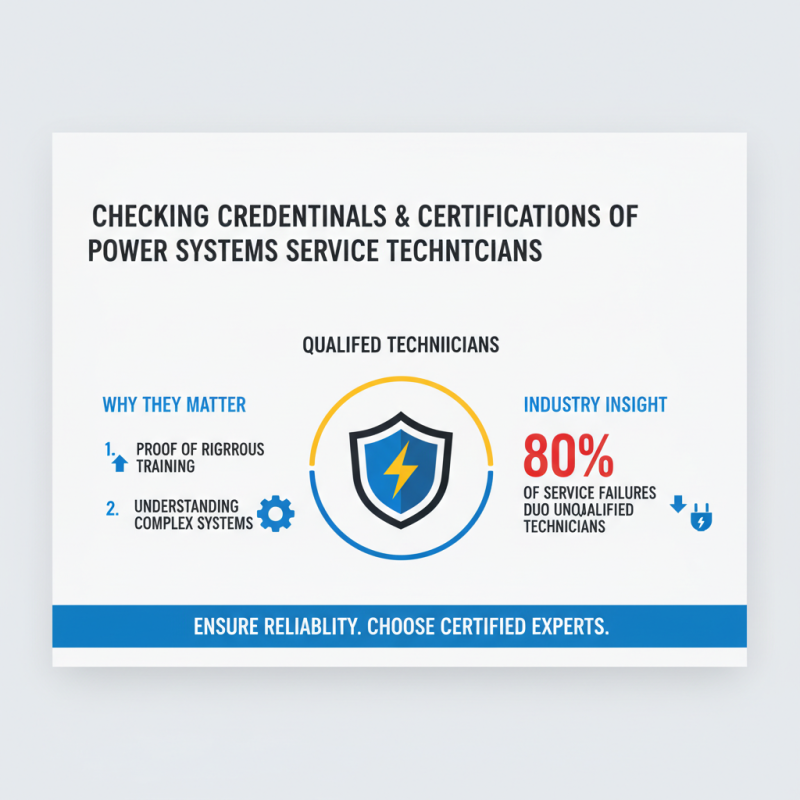
When selecting a power systems service, the credentials and certifications of technicians play a crucial role. Industry reports show that nearly 80% of service failures stem from unqualified technicians. Certifications demonstrate that technicians have undergone rigorous training, ensuring they understand complex power systems.
Look for certifications from recognized organizations. These certifications often require ongoing education, which is vital in a rapidly evolving field. For instance, the International Society of Automation indicates that certified technicians are 50% more effective in troubleshooting issues than those without formal certification.
It’s also essential to consider real-world experience. A highly qualified technician may lack practical skills. Ask potential service providers about their training programs and hands-on experience. No one wants a technician learning on the job, especially in critical systems. Thorough vetting of credentials can help you avoid costly mistakes in the long run.
Assessing Customer Reviews and Testimonials for Reliability
When evaluating power systems services, customer reviews and testimonials play a pivotal role. A recent industry report revealed that 78% of consumers base their decisions on online reviews. These reviews provide real insights into service reliability and customer satisfaction. Reading through various testimonials can help you gauge a company’s transparency and commitment to quality.
Diving deeper into the reviews, look for feedback regarding response times and support availability. A survey noted that 60% of users were dissatisfied with delayed responses during emergencies. This highlights the importance of responsive support systems. Avoid companies with numerous complaints about unaddressed issues. Also, pay attention to patterns in feedback; recurring points signify larger operational shortcomings.
Distinctive customer experiences make reviews crucial. Some customers may express frustrations due to unexpected costs or maintenance delays. This is a reminder that not all services are perfect. Extract lessons from both positive and negative experiences shared. Engaging with specific examples can illuminate potential pitfalls and strengths in service offerings. Aim for services that prioritize customer success genuinely.
How to Choose the Best Power Systems Service for Your Needs? - Assessing Customer Reviews and Testimonials for Reliability
| Service Provider |
Customer Rating (out of 5) |
Number of Reviews |
Response Time (hours) |
Satisfaction Score (%) |
| Service A |
4.5 |
150 |
2 |
92 |
| Service B |
3.9 |
85 |
4 |
75 |
| Service C |
4.8 |
200 |
1 |
95 |
| Service D |
4.2 |
60 |
3 |
80 |
| Service E |
4.0 |
120 |
6 |
73 |
 Employee Login
  Contractors Induction