Digital Power System Overview Best Practices for Global Buyers?
In today's rapidly evolving world, understanding the digital power system is crucial. An overview of power system technologies illuminates essential trends and practices suitable for global buyers. This overview reveals the transition from traditional systems to digital infrastructures, emphasizing the need for adaptability.
As we delve into the complexities of digital power systems, buyers face unique challenges. They must navigate through various technologies while ensuring compatibility with existing infrastructures. This process can lead to overwhelming choices, which may not always yield the best outcomes.
Moreover, the importance of collaboration among stakeholders cannot be overstated. Knowledge sharing and partnerships can bridge gaps in expertise. However, this collaborative effort often requires reflection on past mistakes. Buyers must continuously assess their strategies to ensure they align with best practices in the digital landscape.

Digital Power System Defined: Key Concepts and Components
Digital power systems play a crucial role in modern energy management. They encompass a range of technologies that integrate digital infrastructure with power generation and distribution. These systems enhance reliability, efficiency, and responsiveness in electrical grids. According to a recent report by the International Energy Agency, global investments in digital power infrastructure reached over $300 billion in 2022 alone.
Key components of digital power systems include smart meters, grid automation tools, and data analytics platforms. Smart meters enable real-time monitoring of energy consumption. This not only promotes energy efficiency but also allows for demand response initiatives. Grid automation tools help predict and mitigate outages, ultimately increasing grid reliability. Similarly, data analytics platforms analyze large datasets to optimize energy distribution. A report from the Global Energy Institute highlights that companies utilizing these technologies can reduce operational costs by up to 20%.
Despite the advantages, challenges persist. Cybersecurity risks remain a significant concern, with a report from Cybersecurity Ventures estimating that cyberattacks on power systems could cost the industry over $30 billion by 2025. Additionally, integrating legacy systems with new technologies can hinder progress. Continuous evaluation and investment in training are essential to fully realize the potential of digital power systems. Adapting to these challenges is crucial for global buyers aiming to enhance their energy management strategies.
Digital Power Systems: Component Performance Comparison
Current Trends in Digital Power Systems Globally
As digital power systems evolve, various global trends are reshaping the market landscape. According to a report by Navigant Research, the global digital power system market is expected to reach $11.7 billion by 2025, growing at a compound annual growth rate (CAGR) of 9.3% from 2020. This growth is influenced by the increasing demand for efficient energy management solutions and the integration of renewable energy sources.
Moreover, the rise of smart grid technology is a significant trend. Implementing smart grids can enhance communication between power generation and consumption. This helps optimize energy usage, but it also presents challenges, such as cybersecurity risks. This concern requires careful consideration as systems become interconnected. Stakeholders must prioritize robust security measures to safeguard data and infrastructure.
Another key trend is the emphasis on sustainability. A survey by Deloitte found that 76% of consumers prefer brands committed to sustainability. Companies in the digital power space must adapt to these consumer preferences. They need reliable data to validate their commitments. While advancements are notable, organizations must continuously evaluate their approaches to ensure they meet evolving needs and standards in a complex environment.
Best Practices for Selecting Digital Power Solutions
Selecting digital power solutions can be daunting. There are many factors buyers must consider. Clarity on power needs is crucial. Understand the application and environment to choose the right solution. Evaluate how these systems will integrate with existing infrastructure. Compatibility is key to smooth operation.
Research the provider’s track record. Look for expertise in digital power solutions. Trust or reliability can influence your choice. Seek out established players with proven capabilities. Check reviews, case studies, or testimonials for insights. This can help confirm their credibility.
However, don’t overlook emerging technologies. Innovations can enhance system efficiency or reduce costs. Yet, new doesn’t always mean better. Weigh the benefits against potential risks. Understand that every technology has a learning curve. Sometimes, established options may provide more immediate benefits. Balancing innovation with reliability is essential in decision-making.
Digital Power System Overview Best Practices for Global Buyers
| Criteria |
Description |
Importance Level |
Recommended Practices |
| System Efficiency |
Evaluate the efficiency of the digital power solution to maximize energy savings and minimize operational costs. |
High |
Look for solutions with high conversion efficiency ratings. |
| Scalability |
Ensure the solution can grow with your business demands. |
Medium |
Choose modular solutions that can easily be expanded. |
| Integration Capability |
Assess how well the solution integrates with existing systems and technology. |
Medium |
Opt for solutions with open APIs and compatibility features. |
| Reliability |
Consider the reliability and uptime of the digital power solutions offered. |
High |
Select solutions with proven performance metrics and lower failure rates. |
| Customer Support |
Evaluate the level of customer support and service provided. |
Low |
Research user reviews regarding support and service response times. |
| Cost of Ownership |
Analyze the total cost of ownership, including initial, maintenance, and operational costs. |
High |
Request detailed cost breakdowns before making a decision. |
Evaluating Suppliers: Criteria for Global Buyers in Digital Power
When evaluating suppliers for digital power systems, global buyers should prioritize several critical criteria. First, understanding the supplier's expertise in energy efficiency can provide insights into their reliability. A recent report indicated that companies with robust energy management systems can reduce operational costs by up to 20%. This data highlights the importance of efficiency when selecting a partner.
Furthermore, product certifications matter significantly. Buyers should seek systems that comply with international standards like ISO and IEC. Compliance not only ensures safety but also enhances system longevity. A significant 70% of failures in digital power systems can be traced back to non-compliance with these standards. This statistic emphasizes the importance of integrating quality checks into supplier evaluations.
Lastly, evaluating a supplier’s customer support and service network is crucial. Availability of local support can dramatically reduce downtime during issues. Some digital power systems face challenges with software integration, impacting performance and reliability. Buyers should assess past customer feedback to gauge a supplier’s responsiveness. Though it is tempting to focus solely on cost, overlooking these factors can lead to regrettable investments.
Future Challenges and Opportunities in Digital Power Systems
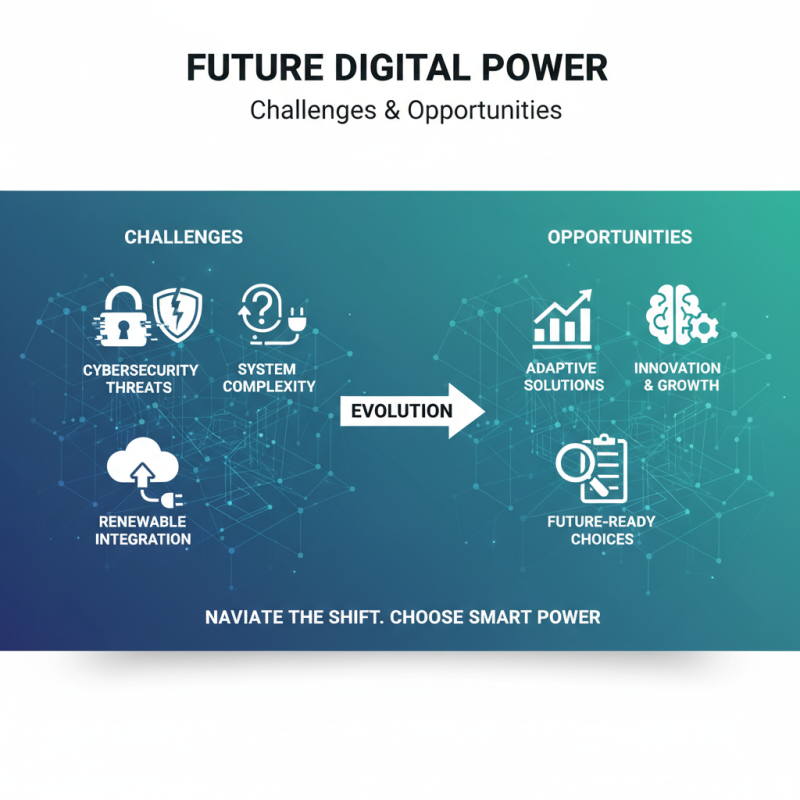
Digital power systems are rapidly evolving, presenting both challenges and opportunities. As industries increasingly adopt digital technologies, they must navigate issues such as cybersecurity threats and the integration of renewable energy sources. The complexity of these systems can be daunting. Buyers need to ensure they choose solutions that not only meet current needs but also adapt to future demands.
Emerging technologies like artificial intelligence and big data analytics are reshaping the landscape. These advancements offer potential improvements in efficiency and reliability. However, they also require a skilled workforce capable of managing sophisticated systems. Companies must reflect on their existing capabilities. Are they prepared to handle these innovations?
Moreover, regulatory frameworks can be inconsistent across regions. This presents a risk for global buyers. It's crucial to stay informed about compliance and best practices. Companies often overlook this aspect, which can lead to costly setbacks. Buyers must engage with experts to ensure their digital power strategies are robust and sustainable.
 Employee Login
  Contractors Induction