Designing an effective electrical system is crucial for any project. A well-thought-out design of electrical system ensures safety and efficiency. Poor design choices can lead to serious issues, such as equipment failure or safety hazards. Each component must work harmoniously to avoid common pitfalls.
Consider the layout early on. Placement of outlets, switches, and circuits can make a big difference. Effective planning can simplify maintenance and enhance usability. Additionally, keeping up with codes and standards is essential. Ignoring these can result in legal complications and increased costs.
Reflection on past designs is vital. Analyzing successes and failures helps improve future projects. Every decision shapes the overall performance of the system. Embracing feedback and learning from mistakes can lead to better designs. A thoughtful approach to the design of electrical system paves the way for innovation and reliability.
When designing an electrical system, understanding load calculations is crucial. A load calculation determines the total electrical demand of a building. This information helps in sizing the electrical components correctly. Inaccurate calculations can lead to overloads. That’s a costly mistake.
Start by gathering data on all electrical devices. List their wattage and peak usage times. Knowing this creates a clearer picture of your system’s needs. You might find unexpected high-demand devices that skew your calculations. Be diligent.
Consider these tips: Use a professional calculator to avoid human error. Always round up your estimates to ensure safety. Include future expansions in your calculations. It’s easy to overlook this. It may seem trivial, but electrical systems should evolve with needs. Remember to review your calculations regularly; changes might occur unexpectedly. An often ignored aspect is ventilation and cooling needs. Ignoring them can lead to system failures. Adjusting load calculations may be necessary closer to installation. This might feel like unnecessary work, but it pays off in safety and reliability.

When designing an electrical system, adherence to the National Electrical Code (NEC) is crucial for safety. The NEC provides guidelines that ensure safe practices in electrical installations. In the latest report by the National Fire Protection Association, it was noted that electrical failures contribute to 31% of home structure fires. These incidents highlight the importance of following NEC standards to mitigate risks.
Using NEC standards not only reduces hazards but also enhances system reliability. For instance, proper grounding techniques can prevent electrical shock. Inadequate grounding is a common error that can lead to severe consequences. A survey revealed that nearly 35% of electricians reported encountering grounding issues in their projects. This emphasizes the need for thorough inspections and careful adherence to NEC guidelines.
Furthermore, the NEC outlines requirements for circuit sizing and protection. Failure to comply often leads to overloaded circuits. According to industry statistics, overloaded circuits are implicated in over 15,000 electrical fires annually. Regular training on NEC updates is essential for professionals. Many electricians are unaware of changes in regulations, leading to unintended violations. Regular reviews of NEC standards are necessary for enhancing safety and compliance.
Choosing the right conductors for an electrical system is critical. The materials used can significantly impact performance. Copper and aluminum are common choices. Copper offers excellent conductivity and durability. However, it is often more expensive than aluminum, which is lighter and more cost-effective.
Sizing is another crucial factor in conductor selection. Undersized conductors can lead to overheating. This could cause equipment failure or even fire hazards. On the other hand, oversized conductors may incur unnecessary costs. The appropriate gauge depends on the amperage and length of the circuit. Considering voltage drops is also essential.
Reflecting on past projects can guide better decisions. If a conductor failed, analyze why it happened. Did you choose the right material? Was the sizing adequate? Recognizing these mistakes can lead to smarter choices in future designs. Experimenting with different configurations can also enhance system reliability.
| Tip Number | Tip | Material | Sizing Consideration |
|---|---|---|---|
| 1 | Choose the right conductor material | Copper | Consider ampacity ratings |
| 2 | Evaluate installation environment | Aluminum | Account for ambient temperature |
| 3 | Consider corrosion resistance | Tinned Copper | Ensure sufficient cross-sectional area |
| 4 | Select the right gauge | Stranded Copper | Confirm voltage drop limits |
| 5 | Plan for future expansion | Aluminum Alloy | Oversize conductors where necessary |
| 6 | Use appropriate insulation | PVC Coated | Consider insulation temperature rating |
| 7 | Assess conductor length | Copper | Adjust for voltage drop |
| 8 | Check local codes and standards | N/A | Follow regulatory requirements |
| 9 | Consider conductor bundling | Aluminum | Evaluate derating factors |
| 10 | Consult with a professional | N/A | Get expert sizing recommendations |
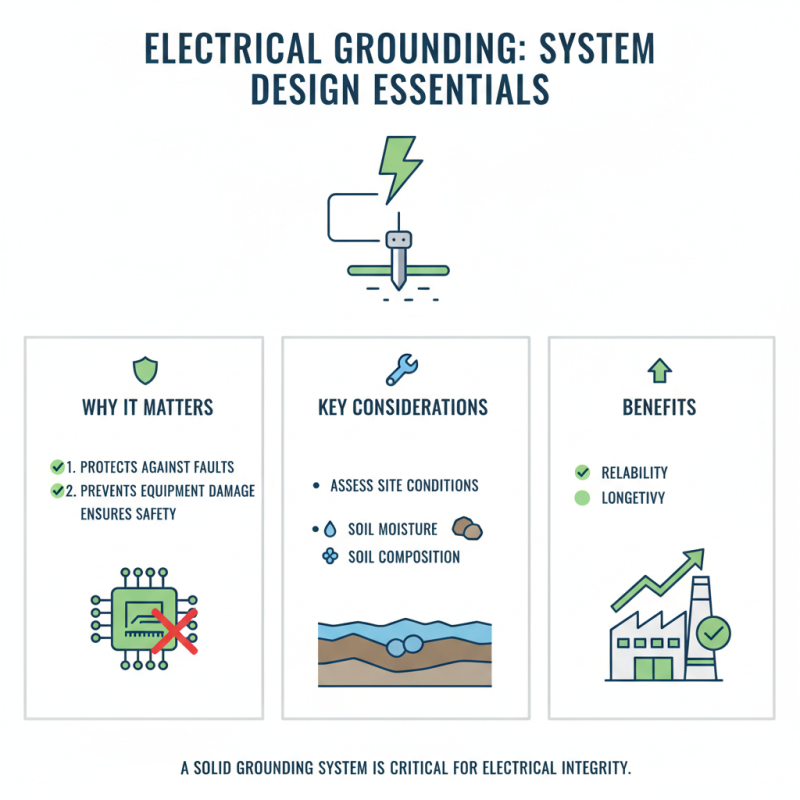
Grounding is critical to electrical system design. It serves as a protective measure against electrical faults. A solid grounding system can prevent equipment damage and ensure safety. Before you implement grounding techniques, assess the site conditions. Soil moisture and composition affect grounding effectiveness.
Choose appropriate grounding methods. For instance, rod grounding is common in residential systems. Ensure that the rods are driven deep enough for optimal conductivity. Inspect and maintain grounding connections regularly. Corrosion or loose connections can impact performance.
Consider grounding for various equipment types. Sensitive electronics may need dedicated grounding. This can minimize interference. Don't overlook surge protection devices. They should be grounded properly to function effectively. Always document your grounding strategy to facilitate future assessments and improvements.
In today’s evolving energy landscape, integrating renewables and smart grids is essential for enhancing energy efficiency. Solar panels and wind turbines offer cleaner alternatives to fossil fuels. However, their unpredictable nature presents challenges. Often, energy generation doesn’t match demand. Smart grids can help manage this discrepancy effectively.
Smart grids utilize advanced technology. They enable real-time data analysis and better demand response. For instance, they can adjust energy distribution based on consumption patterns. Despite this, many systems face integration issues. Legacy infrastructure can hinder the adoption of these modern solutions. Updating the grid is costly but necessary.
Energy storage solutions are equally critical. Batteries can store excess energy generated from renewables. This stored energy can be utilized during peak demand. However, many storage technologies are still developing. They require extensive research and investment. The goal is to find a balance between renewable energy and reliable supply. Adopting this approach is a work in progress, but it's crucial for a sustainable future.