How to Improve Power Quality Management System Efficiency?
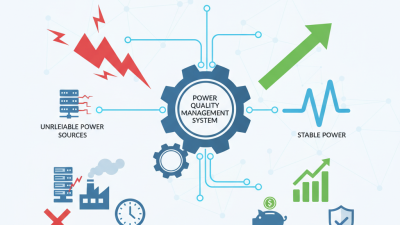
In the evolving landscape of electrical engineering, improving the efficiency of the power quality management system (PQMS) is more crucial than ever. Recent studies indicate that poor power quality can lead to significant financial losses, with industries experiencing up to 10% drops in productivity due to power disturbances. According to the 2022 Power Quality Report by the International Electrotechnical Commission, over 30% of businesses encounter power quality issues annually, impacting equipment lifespan and operational costs.
Expert in the field, Dr. John R. Smith, emphasizes, "Effective management of power quality is not just a technical necessity but a vital part of strategic business operations." His insights resonate with industry reports highlighting the need for advanced PQMS solutions. Companies are challenged to address power quality issues proactively. Many organizations still lack the necessary tools to measure and analyze power quality.
Despite the awareness, implementing an efficient PQMS remains a challenge. Organizations often face setbacks due to insufficient training and outdated technology. Reflecting on these challenges is essential for progress. The need for innovation and investment in PQMS technology is apparent. Without addressing these gaps, companies risk stagnation in an increasingly competitive market.

Understanding Power Quality Management Systems
Power Quality Management Systems (PQMS) play a critical role in ensuring the reliability and efficiency of electrical systems. They focus on monitoring, analyzing, and improving power quality, which directly impacts operational costs and equipment lifespan. According to the Electric Power Research Institute (EPRI), power quality issues can lead to losses amounting to billions annually for industries reliant on stable energy supplies.
Understanding the key components of PQMS is vital. These systems measure voltage stability, frequency variations, and harmonic distortions. The IEEE 519 standard suggests that harmonics should remain below five percent to avoid equipment damage. Implementing advanced analytics can enhance detection of these issues. A proactive approach enables timely intervention, reducing downtime and maintenance costs by up to 30%, as reported by the International Electrotechnical Commission (IEC).
Many organizations still grapple with the complexities of PQMS implementation. Staff training often lags, and outdated equipment remains in use. A study by the Institute of Electrical and Electronics Engineers (IEEE) highlighted that nearly 40% of power quality problems are due to human error and lack of familiarity with existing systems. Emphasizing continuous education and system upgrades can mitigate these issues, fostering a more resilient energy infrastructure.
Identifying Key Power Quality Issues and Their Impacts
Power quality issues can greatly impact both productivity and equipment lifespan. According to a report by the Electric Power Research Institute (EPRI), poor power quality can lead to losses exceeding $150 billion annually in the U.S. alone. Voltage sags, spikes, and harmonics create significant disruptions in industrial settings.
These disturbances can cause machinery to fail or degrade more quickly, resulting in unexpected downtimes.
Identifying key power quality issues is vital for optimizing operations. For instance, voltage sags can be caused by sudden changes in load or faulty equipment. These sags jeopardize sensitive electronics, which are often at the heart of modern manufacturing.
The Institute of Electrical and Electronics Engineers (IEEE) notes that over 70% of electrical accidents are tied to poor quality power. Data gathering and analysis are crucial in pinpointing where improvements are needed.
Mitigation strategies should focus on both preventive and corrective measures. Investment in advanced monitoring systems can provide real-time data. This allows for immediate action and long-term planning. However, many organizations lag in implementing these solutions. There's a clear need for better education on power quality management. Enhancing knowledge in this area can lead to a significant return on investment and a more competitive landscape.
Implementing Effective Monitoring and Measurement Techniques
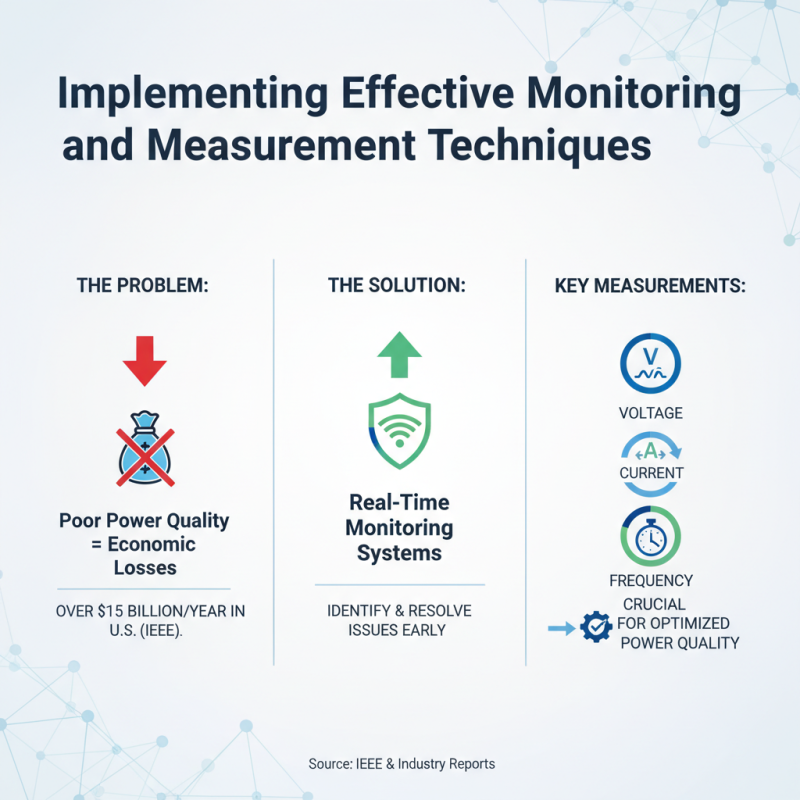
Effective power quality management relies heavily on monitoring and measurement techniques. According to the IEEE, poor power quality can lead to economic losses exceeding $15 billion annually in the United States alone. Implementing real-time monitoring systems can help organizations identify and resolve issues before they escalate. Accurate measurement of voltage, current, and frequency is crucial for this process.
To enhance monitoring efficiency, consider these tips: Use advanced sensors to gather data consistently. Implement software solutions that analyze this data in real-time. Regular calibration of equipment ensures reliability and accuracy, reducing the risk of misleading data. Establishing a feedback loop from measurement results to management decisions is essential for continuous improvement.
Measurement techniques should not only focus on routine analysis but also on anomaly detection. An underperforming system may indicate underlying issues. Regular audits and assessments can help uncover these problems. Remember, the goal is not just to measure but to interpret data effectively. Balancing efficiency and reliability is challenging yet necessary for a robust power quality management system.
Leveraging Technology for Enhanced Data Analysis
Organizations are increasingly leveraging technology to enhance power quality management.
Advanced data analysis tools can dramatically improve system efficiency. According to a study by the Electric Power Research Institute,
businesses can reduce power outages by up to 30% through better data utilization.
Real-time monitoring is critical for identifying disturbances and anomalies early.
Using AI and machine learning algorithms allows for predictive analytics that can foresee power quality issues.
The International Electrotechnical Commission (IEC) found that predictive maintenance can lower equipment failures by approximately
25%. This shift towards data-driven decision-making supports higher reliability
and better resource allocation.
Tips: Regularly update your analytical tools to keep pace with advancements.
Consider integrating IoT devices for real-time data collection.
A comprehensive approach can expose inefficiencies you may not have noticed.
Reflect on your current practices; are you using your data to its full potential?
Embracing technology provides a clear advantage in managing power quality effectively.
Continuous Improvement Strategies for Power Quality Management
Improving the efficiency of a Power Quality Management System (PQMS) is crucial for businesses aiming for optimal operational performance. Continuous improvement strategies play a vital role in this process. According to a report by the Electric Power Research Institute, power quality issues can lead to financial losses ranging from 5% to 20% of a company's revenue. Such data highlights the urgent need for systems that proactively address these issues.
One effective strategy is regular monitoring and analysis. Employing advanced data analytics tools can allow for real-time tracking of power quality metrics. Businesses can identify patterns and pinpoint anomalies swiftly. This practice dramatically reduces downtime and enhances reliability. However, many companies underestimate the importance of employee training in this aspect. A skilled workforce is essential for interpreting data accurately and implementing corrective actions.
Another strategy involves adopting a holistic approach to maintenance. Reactive measures often lead to prolonged outages and higher expenses. Organizations should establish predictive maintenance schedules based on data insights. Still, the challenge lies in balancing maintenance costs with potential power quality improvements. Finding this balance requires periodic assessment and adjustments. It’s essential to remain open to learning and adapting as technologies evolve and new data emerges.
 Employee Login
  Contractors Induction