Why is a Power Quality Management System Essential for Businesses?
In today's digital age, a reliable power supply is crucial for businesses. A "power quality management system" ensures stability and efficiency in electrical systems. According to Dr. Emily Foster, an industry expert in energy solutions, "Managing power quality is not just a necessity; it's a strategic advantage."
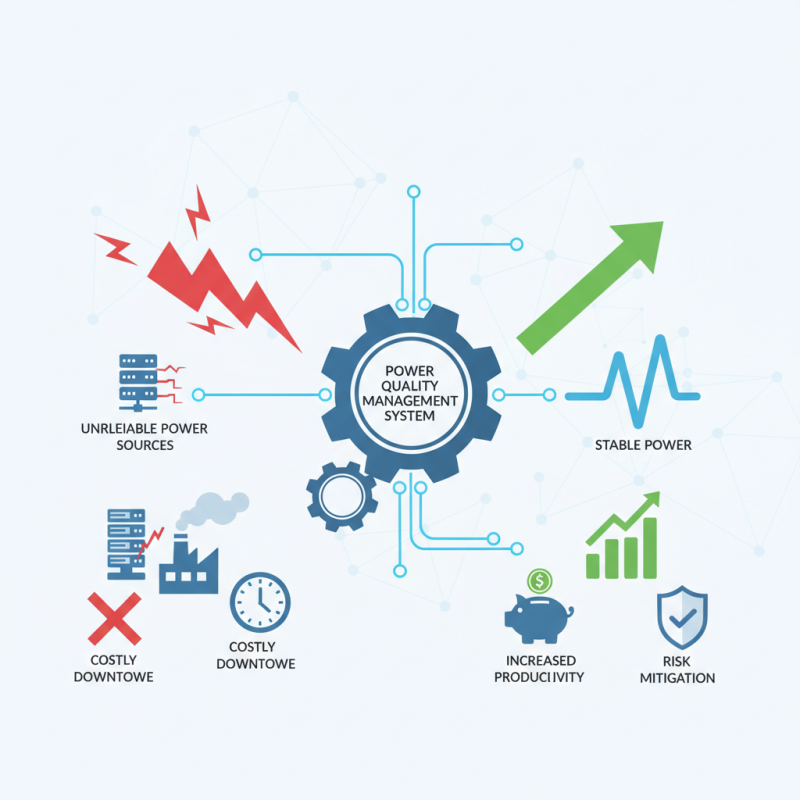
Businesses face increasing challenges from unreliable power sources. Voltage spikes, harmonics, and flickers can disrupt operations. These issues can lead to costly downtime and damage to sensitive equipment. Implementing a power quality management system addresses these risks directly.
However, many organizations underestimate the importance of power quality. Some invest only in basic measures, leaving significant gaps. Without a robust system, risks remain hidden. Companies must recognize that power quality impacts productivity. A proactive approach can save both money and resources in the long run.
Importance of Power Quality for Operational Efficiency in Businesses
Power quality significantly affects operational efficiency in businesses. Research shows that poor power quality can lead to equipment malfunctions. In fact, an estimated 25% of industrial businesses report downtime due to power-related issues. This results in lost revenue and increased repair costs.
Voltage sags and spikes can disrupt manufacturing processes. A study by the Electrical Power Research Institute indicates that these disruptions cost U.S. manufacturers up to $26 billion annually. Every moment of downtime can reduce output and damage equipment. Businesses must prioritize power quality for smooth operations.
Maintaining high power quality enhances productivity. Invested resources in monitoring systems often yield positive returns. Organizations that implement power quality management see a 20% reduction in maintenance costs. Regular assessments help identify problems before they escalate. Monitoring systems are not just an expense; they are a crucial investment for long-term success.
Impact of Power Quality Issues on Financial Performance and Operational Costs
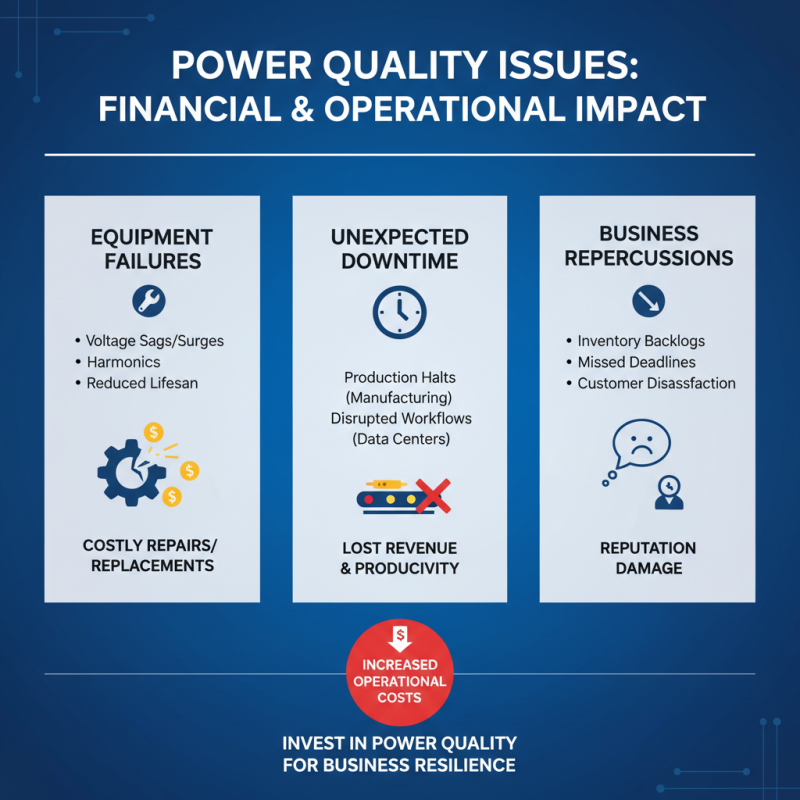
Power quality issues can significantly affect a business's financial health and operational costs. Voltage sags, surges, and harmonics can lead to costly equipment failures. Unexpected downtime can disrupt workflows, resulting in lost revenue. For example, a manufacturing unit might halt production if machinery fails due to poor power quality. This impacts not just profits but also inventory and customer satisfaction.
Tips to mitigate these risks include investing in monitoring tools. These can identify power quality problems before they escalate. Regular audits of electrical systems can reveal hidden issues. Consider training staff to recognize signs of power quality concerns. This proactive approach may prevent costly repairs.
Remarkably, many businesses overlook minor fluctuations. They assume it won’t impact operations. However, consistent power quality checks can save money in the long run. Some companies may hesitate to invest in a power quality management system. This hesitation often leads to higher operational costs. Ultimately, addressing power quality should be seen as a vital investment.
Key Components of a Power Quality Management System for Enterprises
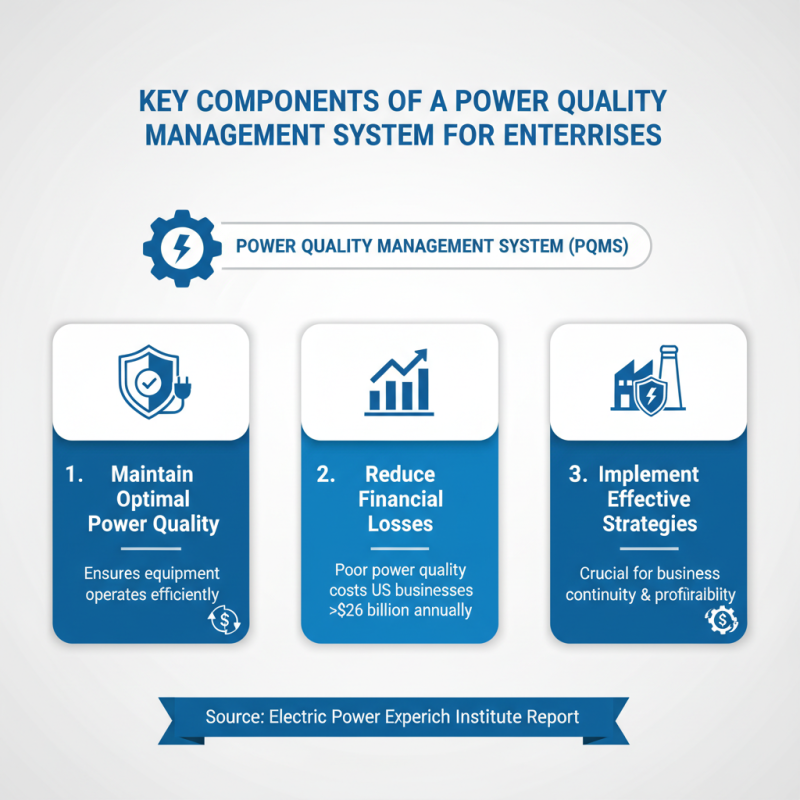
A Power Quality Management System (PQMS) is crucial for enterprises. It helps organizations maintain optimal power quality, ensuring equipment operates efficiently. A report by the Electric Power Research Institute reveals that poor power quality costs U.S. businesses over $26 billion annually. This staggering figure highlights the urgency for businesses to implement effective power management strategies.
Key components of a PQMS include voltage regulation, harmonics management, and transient protection. Voltage regulation prevents fluctuations that can damage sensitive equipment. It plays a vital role in maintaining a stable operating environment. Harmonics management addresses issues caused by non-linear loads, which can lead to overheating and equipment failure. According to a study, nearly 40% of all electrical disturbances arise from harmonics.
Transient protection is equally essential. It safeguards equipment against unexpected surges. A sudden voltage spike can lead to catastrophic failures, resulting in costly downtimes. Implementing a robust PQMS can mitigate these risks. However, many businesses still underestimate the importance of power quality. This oversight can lead to significant financial losses and operational challenges. Prioritizing a PQMS is not just a smart move; it's essential for sustainable growth.
Industry Statistics on Power Quality Disturbances and Their Economic Effects
Power quality disturbances are more common than many realize. Research shows that over 70% of industrial facilities experience voltage sags, surges, or harmonic distortion. These disturbances can disrupt production processes, damage equipment, and lead to significant financial losses. The cost of not addressing power quality can reach millions annually for larger organizations.
In many cases, businesses overlook the importance of a power quality management system. Ignoring these disturbances can impact not only production efficiency but also customer satisfaction. Implementing a robust system can help avoid losses and improve uptime. Awareness is crucial here.
**Tips:** Monitor your voltage levels regularly. Simple checks can prevent major disruptions. Educate your team about power quality issues. Knowledge empowers better decision-making. Small steps lead to significant improvements.
Strategies for Implementing an Effective Power Quality Management System
Power quality issues can disrupt business operations significantly. A Power Quality Management System (PQMS) helps in identifying and mitigating these problems. Companies may suffer losses of up to 10% of their revenue due to poor power quality. Implementing a PQMS can drastically reduce such impacts.
Start by assessing your current power quality. This offers clear insights into existing issues. Monitoring tools can track voltage sags, transients, and harmonics. Regular audits are essential. According to a recent industry study, 70% of companies report enhanced efficiency after these assessments.
Training staff is crucial. Equip them with knowledge about power quality impacts. They should understand how to interpret PQMS reports. A focus on continual learning can foster a culture of awareness. Yet, ensure you don't overlook basic training needs. Regular refresher courses can fill those gaps and prevent complacency. By aligning such strategies, businesses can effectively safeguard their operations against power quality disturbances.
Power Quality Management System Performance Metrics
This bar chart displays the number of power quality incident types reported monthly. Monitoring these parameters is essential for businesses to ensure efficient power management and minimize disruptions to operations.
 Employee Login
  Contractors Induction